Imagine starting your day by stepping back in time within the ancient walls of Marrakech, where history and architecture intertwine seamlessly. If you want to visit Marrakech beyond its souks and rooftop cafés, a morning split between the Saadian Tombs and Ben Youssef Madrasa offers a compact, memorable journey through royal legacy, sacred learning and extraordinary craftsmanship.
These two landmarks sit in different parts of the old medina, yet they complement each other beautifully. The Saadian Tombs reveal the power and refinement of a dynasty, while Ben Youssef Madrasa reflects centuries of scholarship and spiritual discipline. With an early start, comfortable shoes and a little planning, you can experience both without rushing.
Why Visit Marrakech’s Saadian Tombs and Ben Youssef Madrasa?
For travelers who love history but do not want a full day of museum-style sightseeing, this pairing is ideal. Both sites are visually rich, easy to understand at a human pace, and close enough to fit into a relaxed half-day route. They also show two very different sides of the city: royal ceremony and student life.
The Historical Significance of the Saadian Tombs
The Saadian Tombs date back to the late 16th century, during the reign of Sultan Ahmed al-Mansour, one of Morocco’s most influential rulers. The complex was built as a burial place for members of the Saadian dynasty, whose wealth and political ambition shaped Marrakech during a golden age.
For centuries, the tombs were hidden from public view, sealed behind walls and largely forgotten. They were rediscovered in 1917, an event that restored one of the city’s most evocative heritage sites to the map. Today, visitors come to see the Chamber of the Twelve Columns, delicate stucco work, marble details and the quiet garden graves that surround the main mausoleum.
Architectural Beauty at Ben Youssef Madrasa
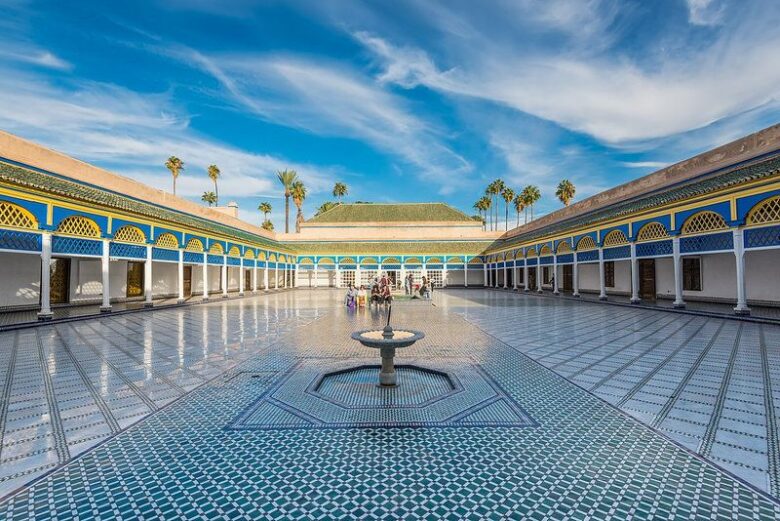
Ben Youssef Madrasa was once the largest Islamic college in Morocco, housing up to 900 students. It was a place of study, prayer and daily discipline, where young scholars lived in modest rooms around an ornate central courtyard.
The contrast is striking: the student cells are simple, but the shared spaces are breathtaking. Cedar wood, carved plaster, zellige tilework and geometric inscriptions create a feeling of harmony and devotion. Even if you are not an architecture expert, the details invite you to slow down, look closer and appreciate the patience behind every surface.
Morning Itinerary for Saadian Tombs and Ben Youssef Madrasa
A good route begins early, before the medina becomes too busy. Aim to start around opening time, especially in spring, autumn or peak holiday periods. The Saadian Tombs are often best visited first because queues can form later in the morning, particularly near the most famous chamber.
Starting at the Saadian Tombs: A Step Back in Time
Begin in the Kasbah district, near the Moulay El Yazid Mosque. Once inside the tombs, take your time in the garden before heading to the decorated rooms. The site is not large, but it rewards patience. Notice how the graves are arranged, how the ornamentation frames the resting places, and how silence gives the complex its emotional depth.
Allow around 40 to 60 minutes here. If there is a line for the Chamber of the Twelve Columns, use the waiting time to look at the exterior details and shaded corners. This is a place where atmosphere matters as much as the headline view.
Next Stop: Uncover Layers of History at Ben Youssef Madrasa
From the Saadian Tombs, you can continue by taxi or walk through the medina if you are comfortable navigating its lanes. The walk can take 25 to 35 minutes depending on your pace and route, with plenty of everyday scenes along the way.
At Ben Youssef Madrasa, plan for 60 to 90 minutes. Start in the courtyard, where the reflecting pool, carved cedar balconies and symmetrical decoration create one of the city’s most photogenic interiors. Then explore the upper levels and former student rooms. Looking down from the galleries helps you imagine how daily life unfolded around study, prayer and conversation.
What to Expect: Architectural Marvels and Historical Insights
Both monuments are intimate rather than overwhelming. You will not find endless halls or long explanatory displays, so a basic understanding before arrival makes the experience richer. The Saadian Tombs speak through funerary art, dynastic memory and the rediscovery of a hidden past. Ben Youssef Madrasa speaks through proportion, repetition and the quiet dignity of learning.
Photography is usually one of the pleasures of this morning route, but the best approach is not to rush from one image to the next. Look for small details: Quranic calligraphy, floral stucco, tile patterns, cedar ceilings and the way light changes across stone and plaster. These are the moments that stay with you after the visit.
The sites can also be busy, so patience is part of the experience. If a room is crowded, wait a few minutes. Tour groups often move quickly, leaving quieter intervals for those who linger.
Tips for Making the Most of Your Morning Visit
To visit Marrakech with less stress, keep the morning simple: two major sites, one clear route and time for a mint tea afterward. The medina is stimulating, and leaving space in your schedule makes the day more enjoyable.
- What is the best time to visit the Saadian Tombs? Early morning is best, ideally close to opening time, when temperatures are cooler and the narrow viewing areas are less crowded.
- How much time do you need at the Ben Youssef Madrasa? Most visitors need about one hour, but architecture lovers may prefer 90 minutes to explore the courtyard, upper galleries and student rooms.
- Are guided tours available for these sites? Yes, licensed guides and private medina tours often include both monuments. A guide can be especially helpful if you want historical context rather than a quick visual visit.
- Wear comfortable shoes. Streets in the old city are uneven, and you may walk more than expected between districts.
- Dress respectfully. These are historic and culturally significant places, so lightweight, modest clothing is a practical choice.
- Bring small cash. Entry fees, taxis and small purchases are easier when you have local currency in smaller notes.
After your second stop, consider ending the morning near the Ben Youssef area with tea, a light lunch or a slow wander toward the souks. By midday, you will have seen two of Marrakech’s most meaningful monuments without exhausting your day.
Ready to experience an all-inclusive resort at the gates of Marrakech? Book now on Valeria Dar Atlas Club Resort all-inclusive and enjoy a stay that combines authenticity, comfort and relaxation.